
Desks
How to Choose a Desk for a Small Bedroom
The right small-bedroom desk is not simply the smallest one that fits against a wall. Here's how to judge the space around your bed, closet, chair, equipment, and desk before you buy.
By Ronald Dadivas · Published 1 October 2026
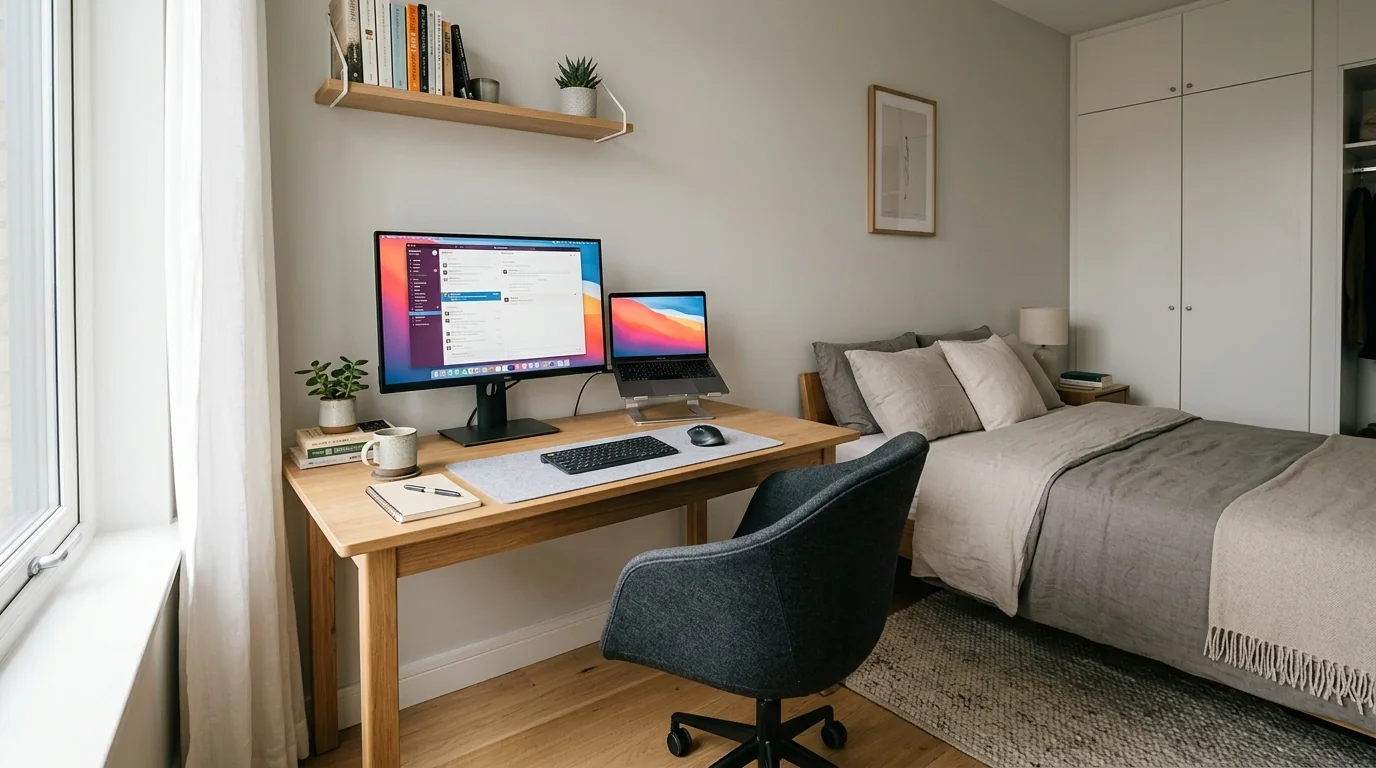
A desk can fit against a bedroom wall and still make the room feel cramped.
The problem is usually not the desk itself. It is everything around it: the chair, bed, wardrobe, door, drawers, cables, and the space you need to move through the room.
For a small bedroom, choose the desk around the entire working area, not just the desktop. Measure the available wall or corner, check how far the desk will project into the room, and make sure you can still pull out your chair, open storage, and move around the bed.
For many laptop or single-monitor setups, a compact desk around 36 to 48 inches wide and roughly 20 to 24 inches deep can be a useful starting range. But these are planning ranges, not universal requirements. Your equipment and room layout should determine the final size.
Start by Measuring the Bedroom, Not the Desk
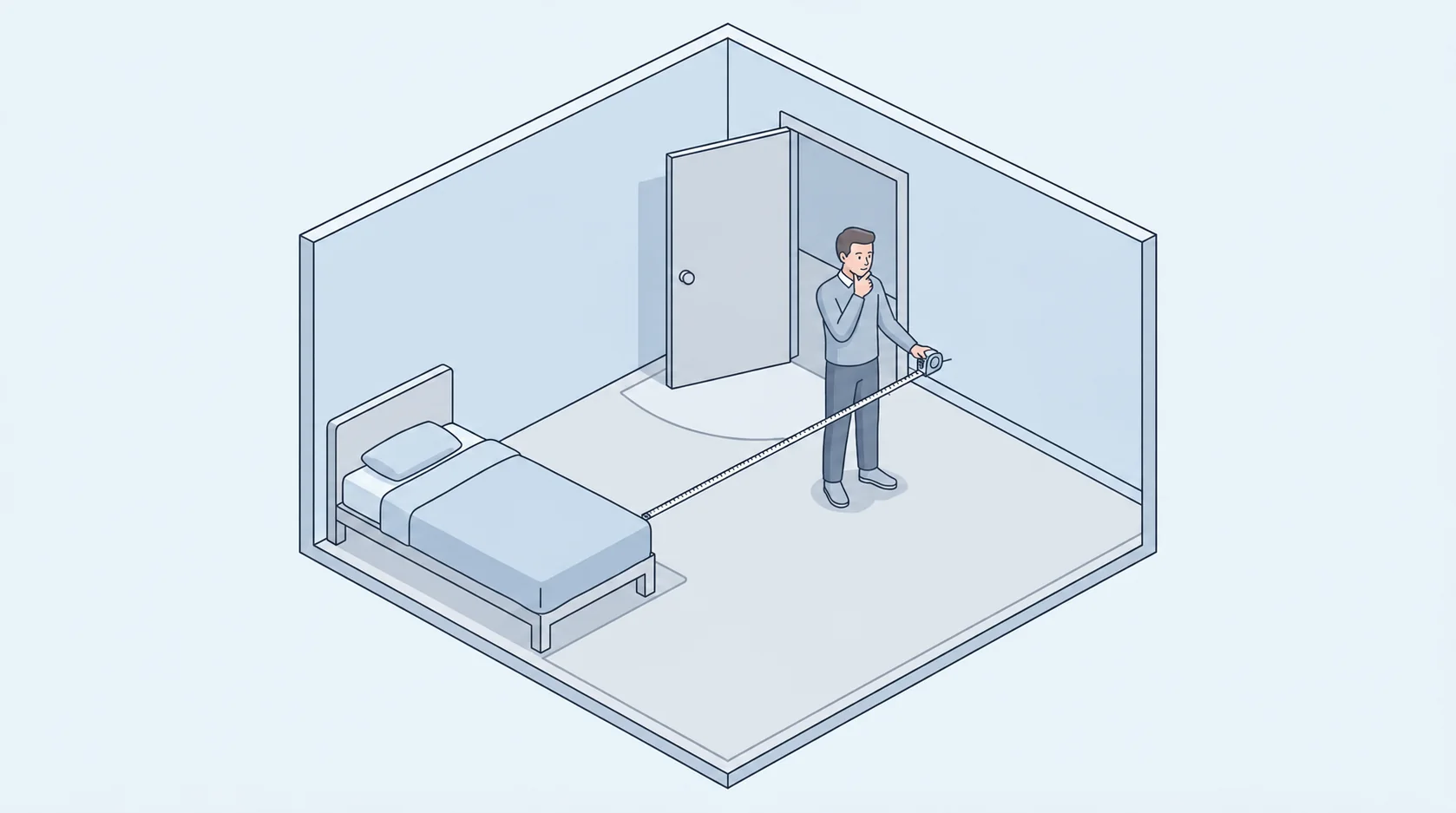
Before looking at desks, choose where you want the workspace to go.
A small bedroom may have only one or two realistic locations. A wall might look wide enough until you account for a closet door. A corner might seem unused until a chair occupies the space in front of it.
Measure:
- The usable wall width
- The distance from the wall to the bed or other furniture
- Door and closet opening paths
- Window trim, radiators, vents, or other obstructions
- Available power outlets
- The space where your chair will sit
- Any walkway that passes near the desk
This gives you the usable footprint rather than the theoretical space shown on a room plan.
A desk should fit into the bedroom without making another everyday task difficult. If you cannot comfortably open the wardrobe because the chair is in the way, the desk is too large for that location even if the desktop technically fits.
What Desk Size Works in a Small Bedroom?
There is no single desk size that works for every small bedroom. Your equipment matters just as much as the available floor space.
As a practical starting point:
| Desk size | Usually suited to | Main trade-off |
|---|---|---|
| 36–48 in × 20–24 in | Laptop or compact single-monitor setup | Limited room for larger equipment |
| 48–60 in × 24–30 in | Laptop, monitor, keyboard, and everyday work | Uses more floor space |
| 60 in+ × 24–30 in+ | Multiple monitors or larger equipment | Much harder to fit into a small bedroom |
These ranges are for planning, not ergonomic standards.
A 40-inch desk can be a better fit than a 48-inch desk if the extra eight inches block a wardrobe or reduce the usable walkway. Likewise, a very narrow desk is not automatically better if it leaves your monitor too close or gives you no room for your keyboard and other frequently used items.
The goal is to find the smallest footprint that still supports the way you actually work.
Choose Width Based on What You Put on the Desk
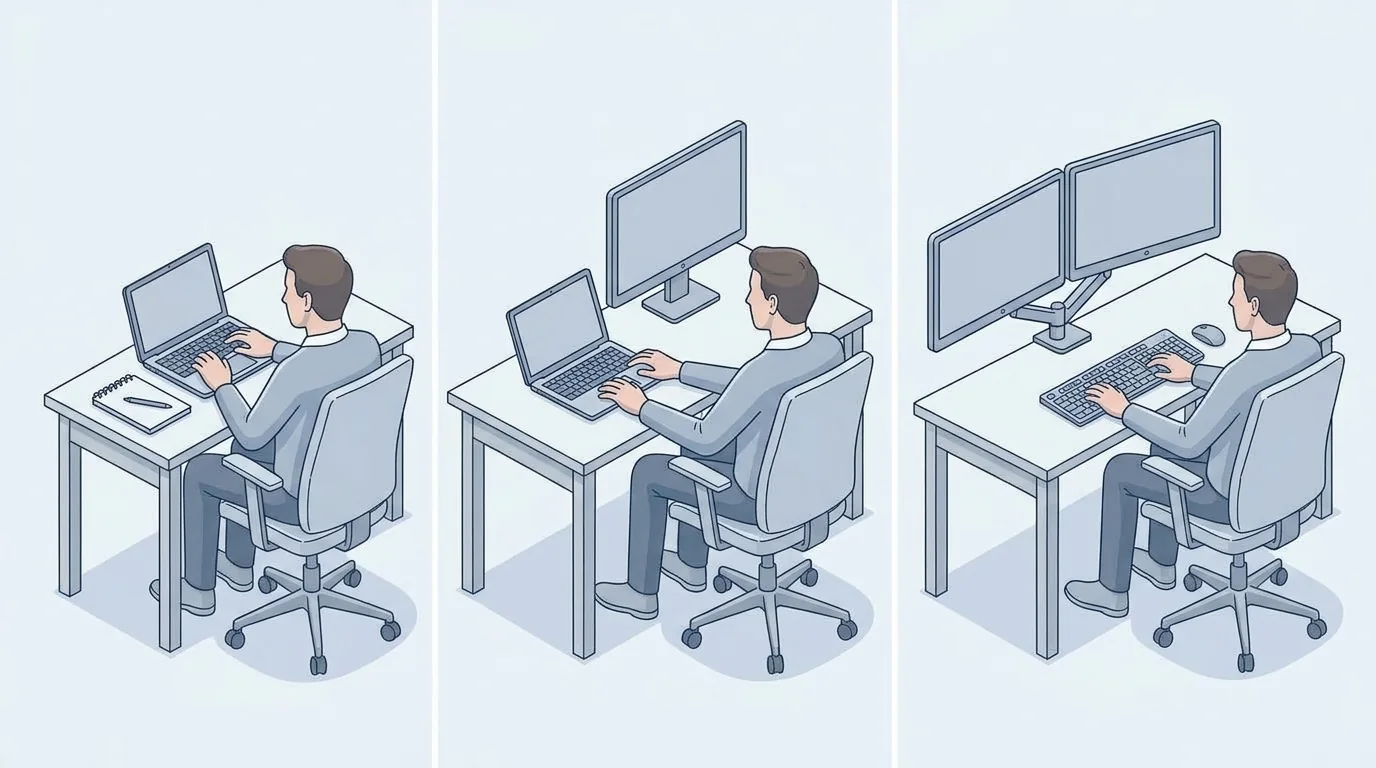
Width determines how much equipment can sit beside you.
A laptop-only setup has very different requirements from a desktop computer with a monitor, speakers, notebooks, and other accessories.
Laptop only
A compact desk can work well if your main equipment is a laptop, mouse, and perhaps a notebook.
A width around 36 to 48 inches gives you some flexibility without taking over the room.
You may not need a large desktop, especially if books, files, or other supplies can be stored somewhere else.
Laptop plus monitor
Once you add a monitor, the working area changes.
You need space for the screen, keyboard, mouse, laptop, and the area where your hands and arms naturally work.
Around 48 inches of width can be a useful starting point for a compact setup, but measure your actual equipment rather than assuming every monitor has the same footprint.
Two monitors
Two monitors require substantially more planning.
Instead of squeezing them onto a small bedroom desk, consider whether a monitor arm could reduce the amount of desktop space occupied by the stands.
For a more detailed discussion of dual-monitor setups, see How Much Desk Space Do You Need for Two Monitors?.
Desk Depth Can Matter More Than Width
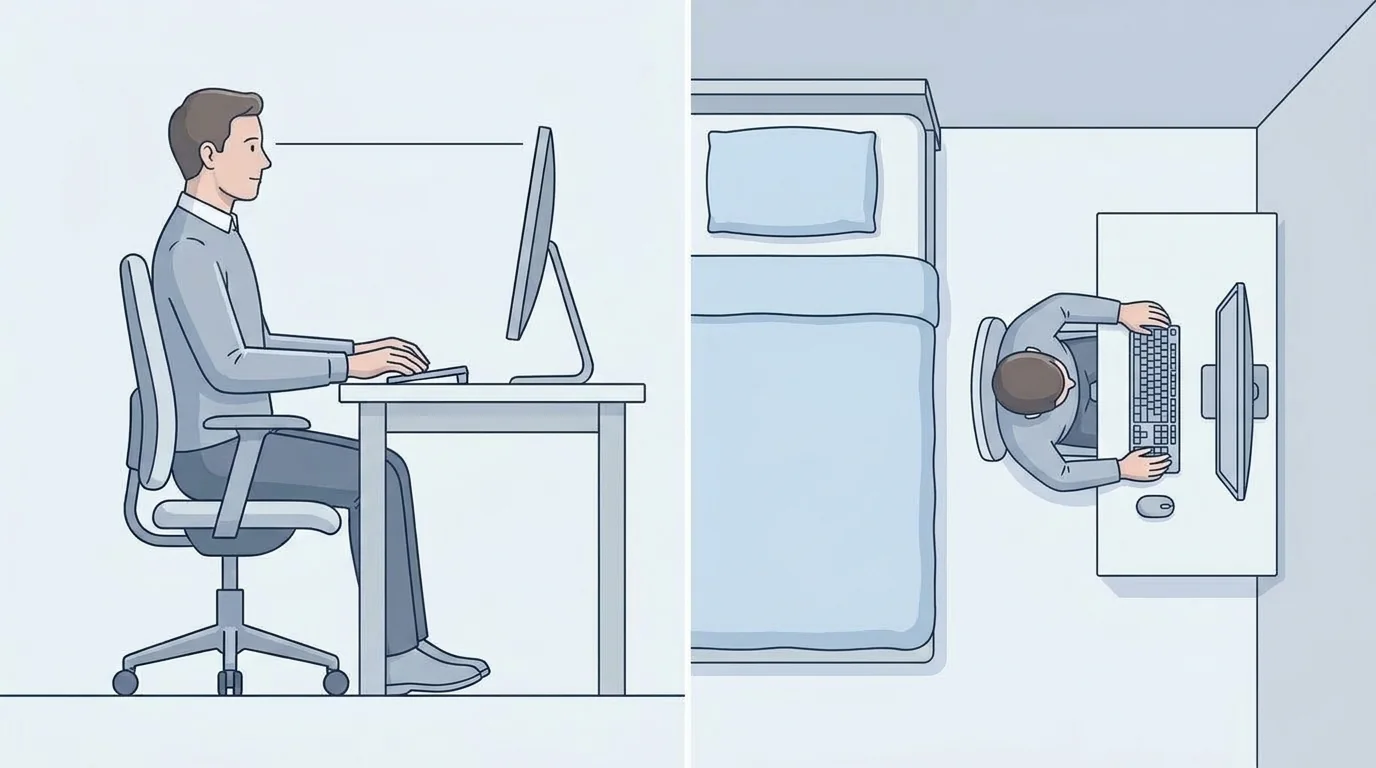
Width tells you how much wall space the desk uses.
Depth tells you how far it pushes into your bedroom.
That makes depth especially important in a small room.
A desk that is 24 inches deep may be perfectly manageable against a clear wall. The same depth could be inconvenient if it sits between the bed and a wardrobe.
There is another issue when you use a monitor. You need enough depth to position the screen at a comfortable viewing distance while still having usable space for the keyboard and mouse.
OSHA guidance recommends positioning a monitor at least 20 inches from the eyes, with a preferred viewing distance generally around 20 to 40 inches. It also notes that the desk needs enough depth to support that positioning.
That is why an extremely shallow desk is not automatically a better small-bedroom choice.
If the desk is too shallow, you may have to push the monitor toward you or place equipment awkwardly. A monitor arm can sometimes help by moving the screen without requiring a large stand on the desktop, but it does not eliminate the need for a suitable viewing distance.
Leave Enough Room for the Chair
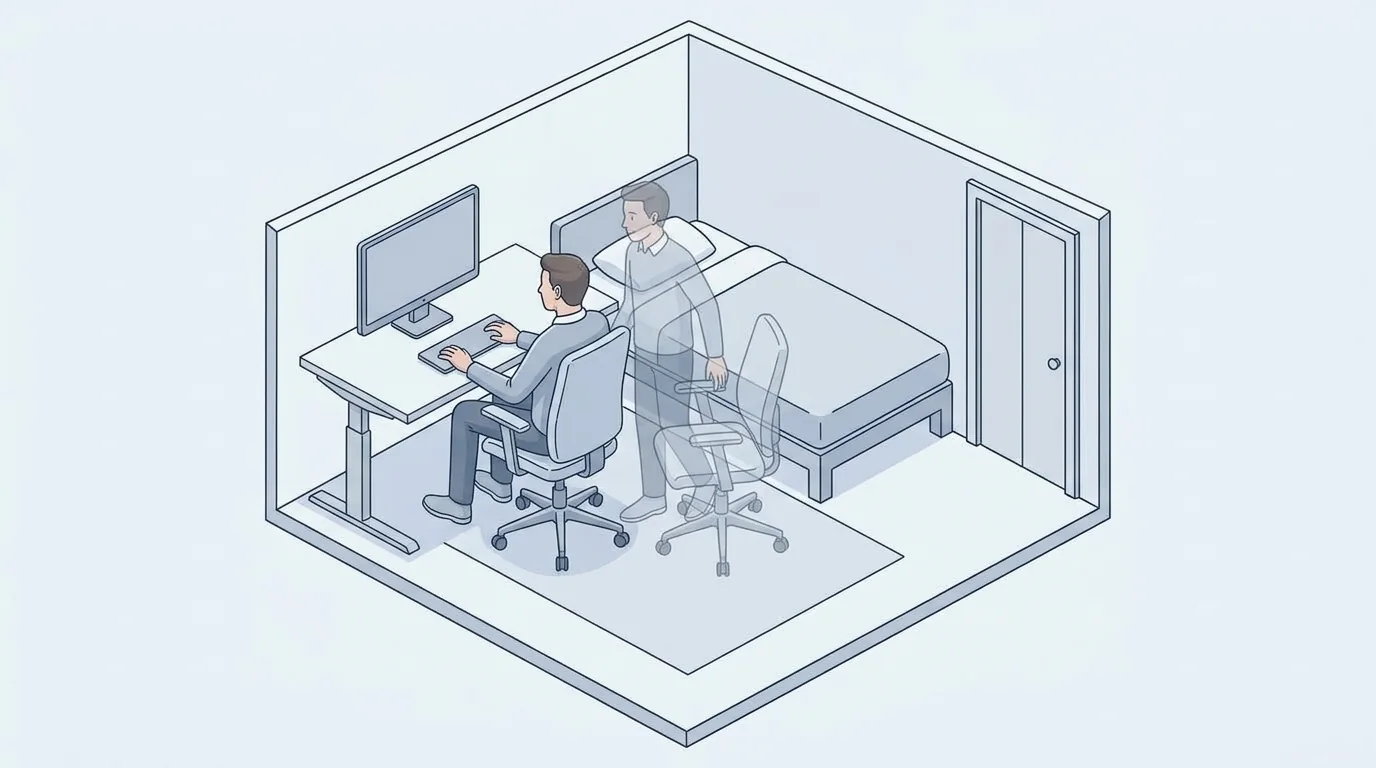
This is where many small-bedroom desk choices go wrong.
People measure the desktop and forget the furniture needed to use it.
Your working footprint includes:
desk + chair + legroom + movement around the chair
Pull your actual chair into the proposed position and test it.
Sit down.
Pull the chair back.
Stand up.
Walk past it.
Open the wardrobe.
Open nearby drawers.
Then imagine doing those things every day.
There is no single clearance number that works for every bedroom because the required space depends on the chair, room layout, furniture, and how the room is used. What matters is whether the chair can move without turning the rest of the bedroom into an obstacle course.
Check the Space Under the Desk
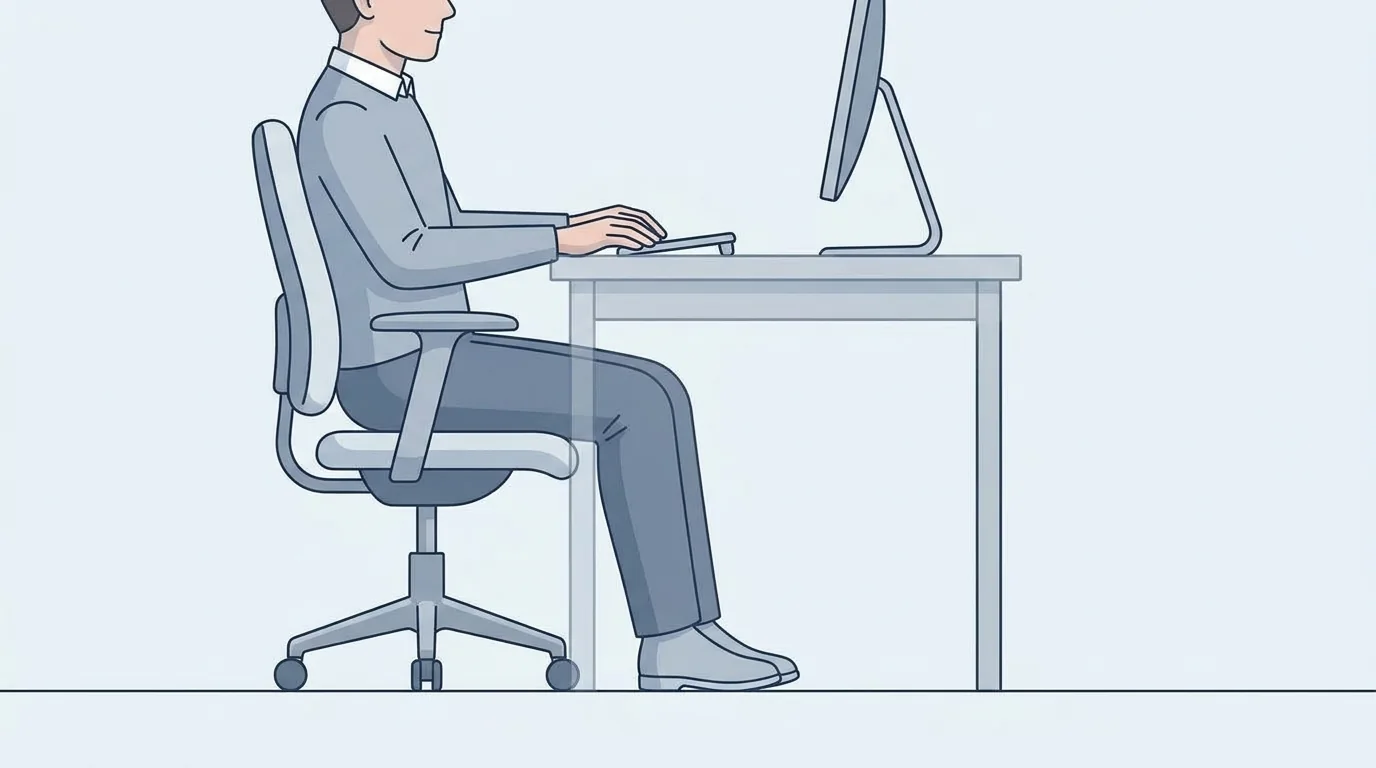
A small desktop can still be uncomfortable if the frame takes away the legroom.
Look underneath the desk before buying it.
Check whether:
- Drawers occupy the space where your knees need to go
- A center support interferes with your legs
- The frame limits how close your chair can move
- Your feet have somewhere comfortable to rest
- The chair can move close enough to the keyboard
- Your legs have enough room to change position
Adequate leg clearance is part of a properly designed computer workstation. The desktop dimensions alone do not tell you whether the desk will be comfortable to use.
This is particularly important in small bedrooms because compact desks often use drawers, shelves, or unusual frames to add storage without increasing their width.
Those features can be useful, but they also consume space that could otherwise be used by your legs.
Decide Where the Desk Should Go
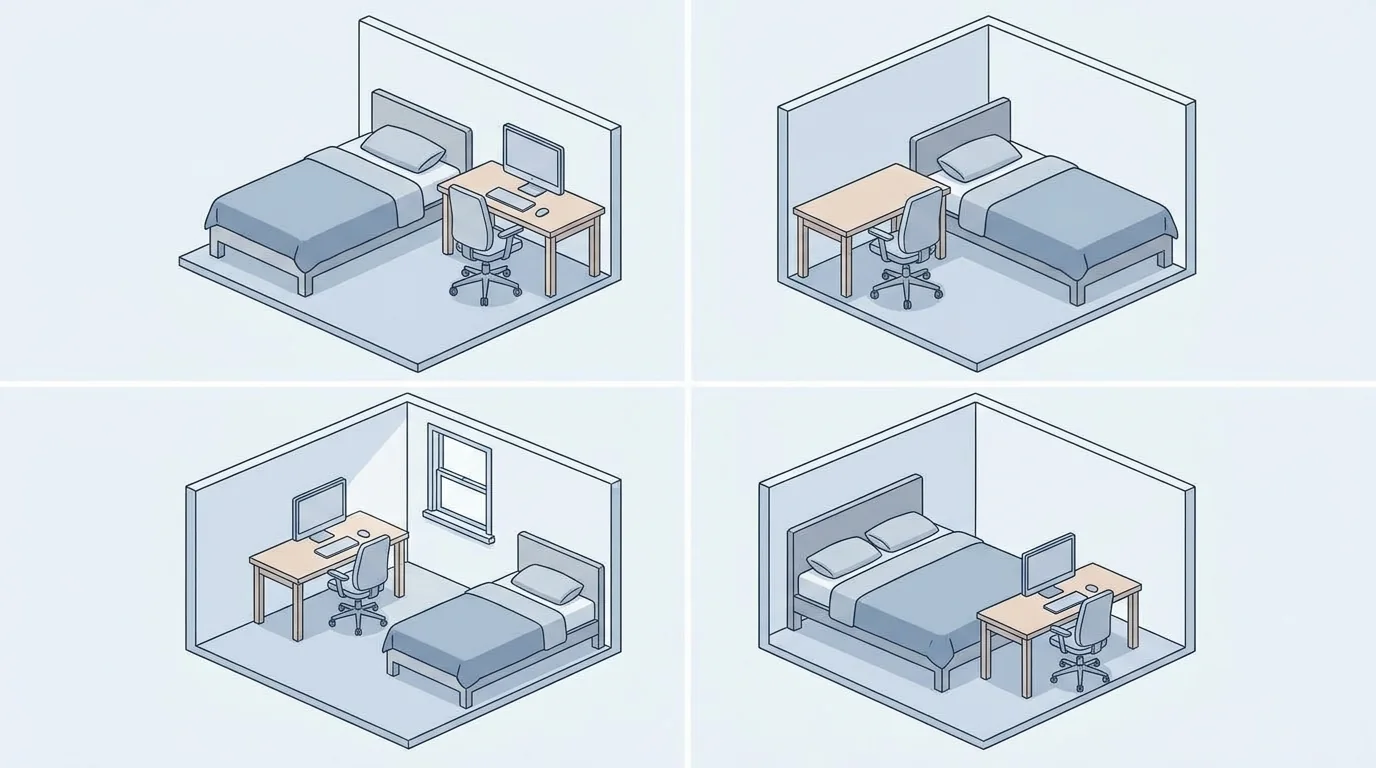
The same desk can work well in one part of a bedroom and poorly in another.
Against a wall
A straight wall is often the simplest arrangement.
It keeps the desk footprint predictable and leaves the center of the room open. If possible, choose a wall where the desk does not interfere with the bedroom door, closet, or main walking route.
In a corner
A corner can make good use of space that would otherwise be difficult to furnish.
It can also provide more usable depth for a monitor setup. However, a corner desk does not automatically save space. Its two sides may extend farther into the room than a narrow straight desk.
Measure both walls and the chair position before choosing one.
Near a window
A window can provide useful daylight, but check what happens when the monitor is in use.
Direct light can create glare on the screen, while placing the desk directly in front of a window may limit your ability to control the light.
If possible, think about where the light comes from rather than simply putting the desk in the brightest part of the room.
At the foot of the bed
This can work in an especially tight bedroom, but it requires careful planning.
The desk should not turn the area around the bed into a narrow passage. A shallow desk may work better here than a conventional deep workstation.
Consider a Wall-Mounted or Folding Desk
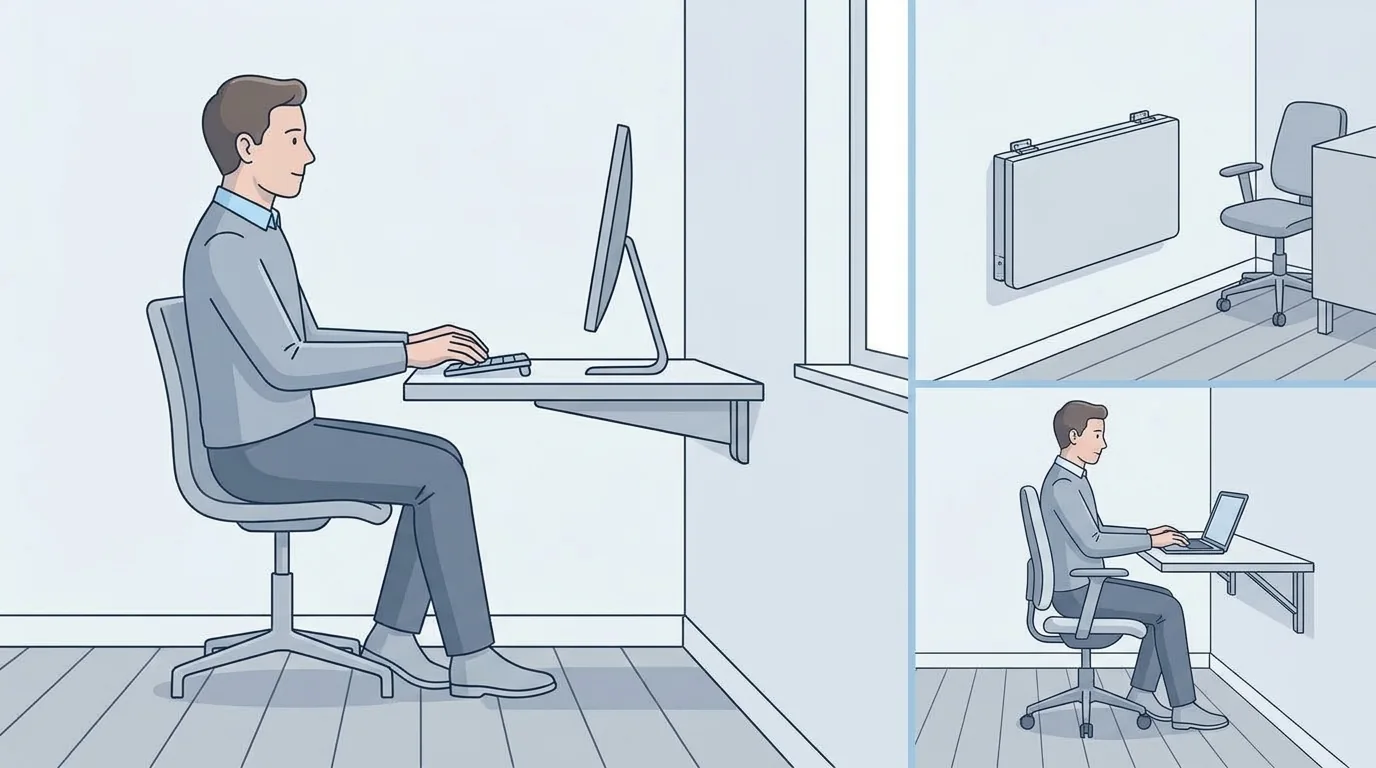
Sometimes the best small-bedroom desk is one that does not need to occupy the same amount of floor space all the time.
A wall-mounted desk can reduce the furniture footprint and leave more open floor beneath it.
A folding desk can make sense when the bedroom needs to serve another purpose after work or study.
But both options have trade-offs.
A smaller or folding work surface may provide less room for monitors, speakers, books, or other equipment. Wall-mounted furniture also gives you less flexibility if you later rearrange the room.
Choose this type of desk because it solves a specific space problem, not simply because it looks compact.
Use Vertical Space Instead of Making the Desk Wider
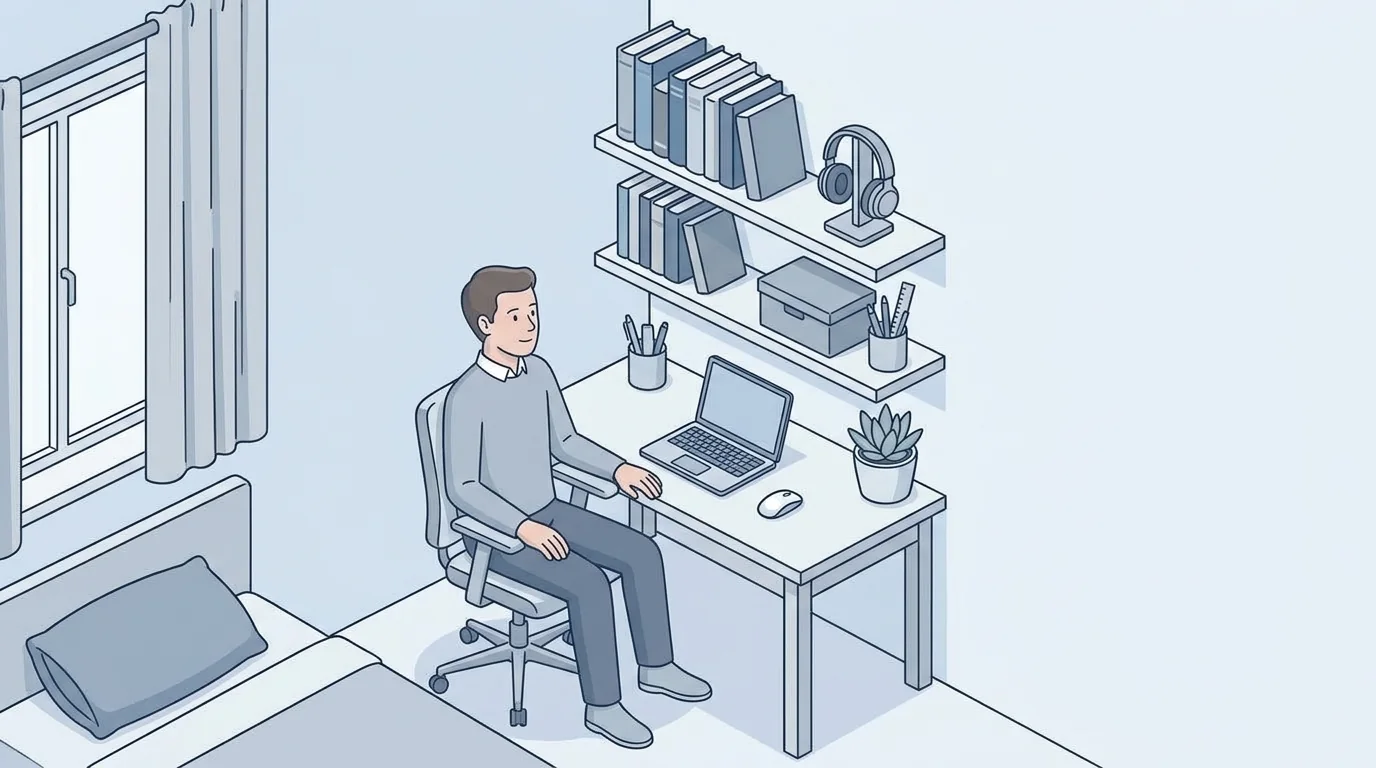
If floor space is limited, look upward.
A shelf above or beside the desk can hold items that would otherwise occupy the work surface.
This can be useful for:
- Books
- Headphones
- Small speakers
- Stationery
- Chargers
- Documents
- Decorative items
Keep the things you use most often within easy reach and move less frequently used items elsewhere.
The aim is not to fill every available wall with storage. Too much storage can make a small bedroom feel visually crowded even when the floor remains clear.
Match the Desk to Your Actual Equipment
Before choosing dimensions, make a simple list of everything that needs to live on or immediately around the desk.
For example:
Laptop setup
- Laptop
- Mouse
- Keyboard
- Notebook
- Small lamp
Single-monitor setup
- Monitor
- Laptop or desktop
- Keyboard
- Mouse
- Speakers or headphones
- Notebook
Desktop setup
- Monitor
- PC
- Keyboard
- Mouse
- Speakers
- Other accessories
Then think about which items actually need to remain on the desktop.
A desktop computer tower does not necessarily need to occupy the work surface. Likewise, headphones can go on a small stand rather than taking up valuable desk area.
Reducing the equipment footprint can sometimes allow you to choose a smaller desk without sacrificing the things you actually use.
Don't Choose a Desk That Is Too Small Just to Save Space
There is a point where compact becomes inconvenient.
If your keyboard barely fits, your notebook has nowhere to go, and your monitor sits too close because there is no depth, the desk is not solving the problem. It is simply moving the problem somewhere else.
A small bedroom does not require a tiny desk.
It requires a desk that uses its available space intelligently.
That might mean choosing a slightly wider desk with less depth, using a monitor arm, moving storage off the desktop, or changing the desk's location.
The right solution depends on which part of the room is actually limiting you.
Test the Layout Before You Buy
You can test a desk footprint without owning the desk.
Use painter's tape to mark the proposed width and depth on the floor.
Then place your chair where it would normally sit.
Try your normal routine:
- Sit at the desk.
- Pull the chair back.
- Stand up.
- Walk around the chair.
- Open the bedroom door.
- Open the wardrobe or drawers.
- Walk between the desk and bed.
- Check where your monitor and keyboard would go.
- Check whether nearby outlets remain accessible.
For an even better test, use cardboard or boxes to represent the desktop and equipment.
This can reveal a problem that measurements alone may miss. A desk may fit on paper but feel awkward once the chair and your daily movements are included.
What Desk Size Is Best for a Small Bedroom?
There is no universal best size.
For a laptop-only setup, something around 36 to 48 inches wide and 20 to 24 inches deep may provide enough working space without taking over the room.
For a laptop and single-monitor setup, moving toward 48 to 60 inches wide and around 24 inches deep can provide more usable surface, provided the bedroom has enough floor space.
If you use two monitors or larger equipment, you may need a larger desk or a different arrangement altogether. In a small bedroom, changing the equipment layout can be more practical than simply buying a wider desk.
The important number is not the desk's advertised size. It is the amount of space left for everything else.
Small Bedroom Desk Checklist
Before buying, check:
- The desk fits the usable wall or corner
- The depth does not block an important walkway
- The chair can move comfortably
- The bedroom door still opens fully
- The wardrobe and drawers remain accessible
- There is enough legroom underneath
- Your monitor can sit at a comfortable viewing distance
- The keyboard and mouse have enough working space
- Frequently used equipment has a practical home
- Power outlets are accessible
- Storage does not overwhelm the room
- The desk still works when the bedroom is being used for rest, not just work
The Right Small Bedroom Desk Should Fit Your Life
Choosing a desk for a small bedroom is less about finding the smallest desk available and more about understanding what the room can realistically support.
Measure the actual space first. Then account for the chair, equipment, storage, doors, walking paths, and legroom.
A compact desk can work extremely well when its dimensions match the way you use the room. But if making the desk smaller forces the monitor too close, leaves no room for your keyboard, or makes the wardrobe difficult to reach, saving a few inches is not worth it.
The best fit is the desk that gives you enough room to work without making the rest of your bedroom harder to use.