
Guides
How to Choose the Right Desk Size
Width gets the attention, but depth and clearance decide whether a desk is comfortable after eight hours. A practical method for sizing your next desk.
By Ronald Dadivas · Published 18 September 2026 · Updated 30 September 2026
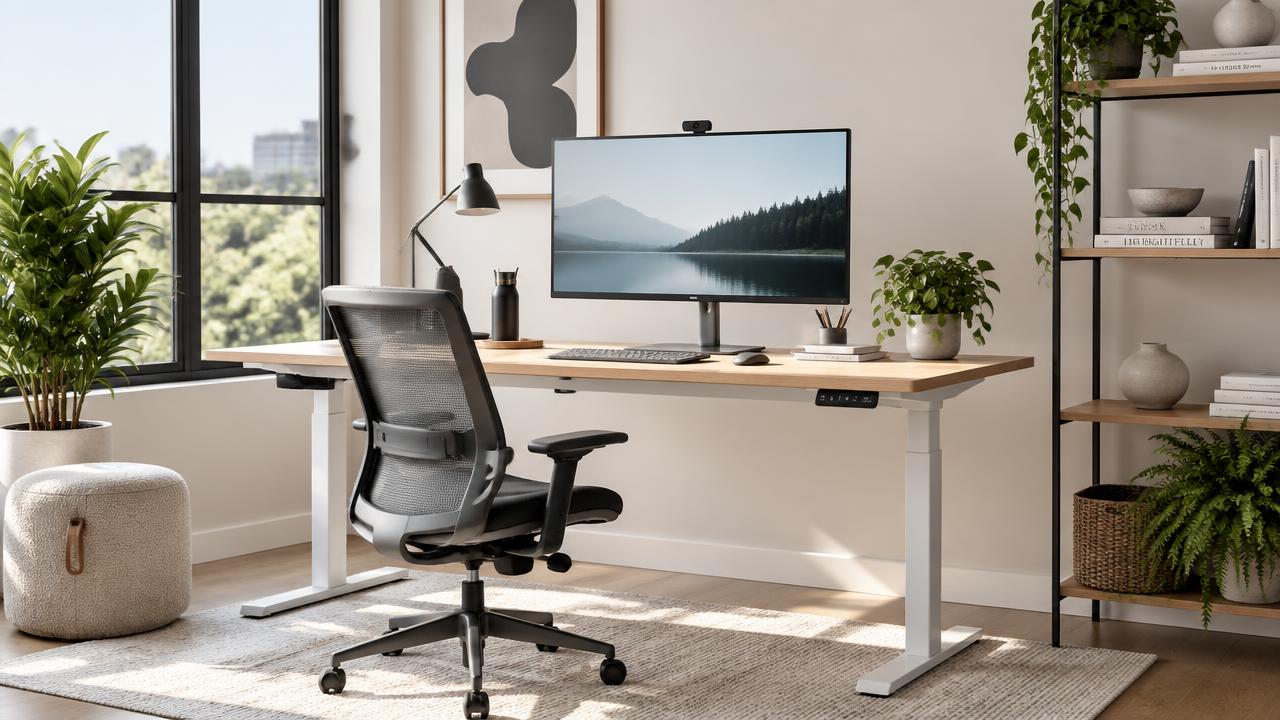
How to Choose the Right Desk Size looks like a simple decision until you are standing in a room with a tape measure. The specifications that get advertised are rarely the ones that decide whether a setup feels right after a full working week, so this guide works through the practical questions in the order they usually matter.
We have kept the advice equipment-agnostic. The aim is that you can walk into any showroom, or read any product page, and know which numbers to check first and which claims to treat carefully.
Start with how you actually work
Before comparing options, write down a normal working day: how many hours seated, how many screens, whether you write by hand, and whether the space serves any other purpose in the evening. Those four answers rule out more choices than any review can.
- Hours spent at the desk on a typical weekday
- Number and size of screens, plus whether they sit on arms
- Whether the space doubles as a bedroom, dining room or studio
- Storage you need within arm's reach rather than across the room
The measurements that matter
Depth is consistently underestimated and width is consistently overestimated. Viewing distance, elbow support and cable routing all depend on depth, while extra width mostly becomes storage for things you never put away.
| Setup | Suggested width | Suggested depth |
|---|---|---|
| Laptop only | 100–120 cm | 60 cm |
| Single monitor | 120–140 cm | 70 cm |
| Dual monitor | 150–180 cm | 75–80 cm |
Where people usually go wrong
Buying for the setup you imagine, not the one you have
A setup planned around future equipment tends to be uncomfortable now. Choose for the way you work today, and leave a small margin rather than a large one.
Treating adjustability as a substitute for fit
Adjustment ranges only help within their limits. If the lowest setting is still too high, no amount of tuning will fix it — which is why the range matters more than the number of levers.
“The best workspace is the one you stop noticing. Comfort is the absence of small daily irritations, not the presence of features.”
How to check before you commit
- Mark the footprint on the floor with tape and live with it for a day.
- Sit at a similar height surface and check elbow and wrist angle.
- Confirm the return policy and how the item is collected if returned.
- Check assembly requirements and whether two people are needed.
Further reading is linked throughout this section, including our related guides on layout and long-session comfort. If something here does not match your experience, our corrections page explains how to tell us.